
Why Shermerville to Northbrook?
By Judith J. Hughes
The Fabric of Our History - Published in 2000 by the Northbrook Historical Society
The reason the name of the Village was changed from Shermerville to Northbrook can be found in newspaper accounts and recollections of those who participated in the events leading up to the change.
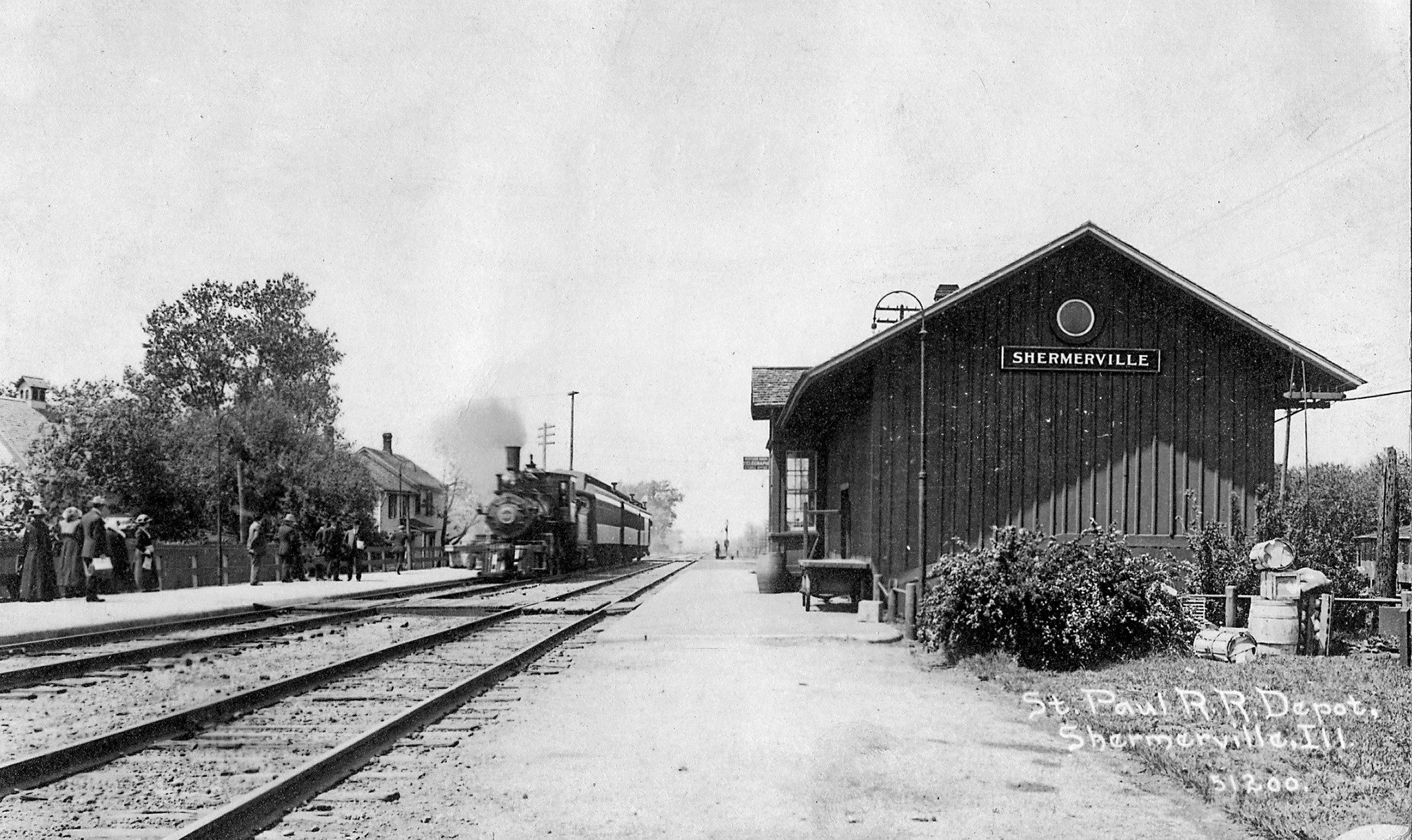
Story from the Libertyville Independent, January 1923:
5 SALOONS FOR 300 ONCE
“The name of Shermerville, a town just south of the Cook Lake County line, will be officially dead beginning Feb. 1, and the move was made to blot out the memory of things that have associated themselves with the name for 50 years. Beginning Thursday it will be known as North Brook, the post office department and the Chicago Milwaukee & St. Paul railroad having accepted the new name.
“Although Shermerville never was regarded as a lawless community, the residents somehow felt that they were unable to live down the fact that in pre-Volstead days it had five saloons at the time the population being less than 500.
“But Shermerville is pepping up. Its people feel that ‘ville’ is no longer appropriate. The population has jumped to more than 900. And while other communities deplore decreasing interest in church activities, Shermerville has made remarkable strides in religious works. When the Rev. Martin Luther Thomas of Deerfield started preaching at Union church years ago the attendance many times was less than a dozen. Now the town boasts a Presbyterian church and the average attendance is 75 or more. The Rev. Mr. Thomas is one of the leaders in the civic advancement of the community.
“In the past two years 40 new bungalows have been built and their wealthy Chicagoans spend their summers there.
“Arthur Therrien is mayor and his two year term has been so successful the residents are urging him to be a candidate for reelection in April.”
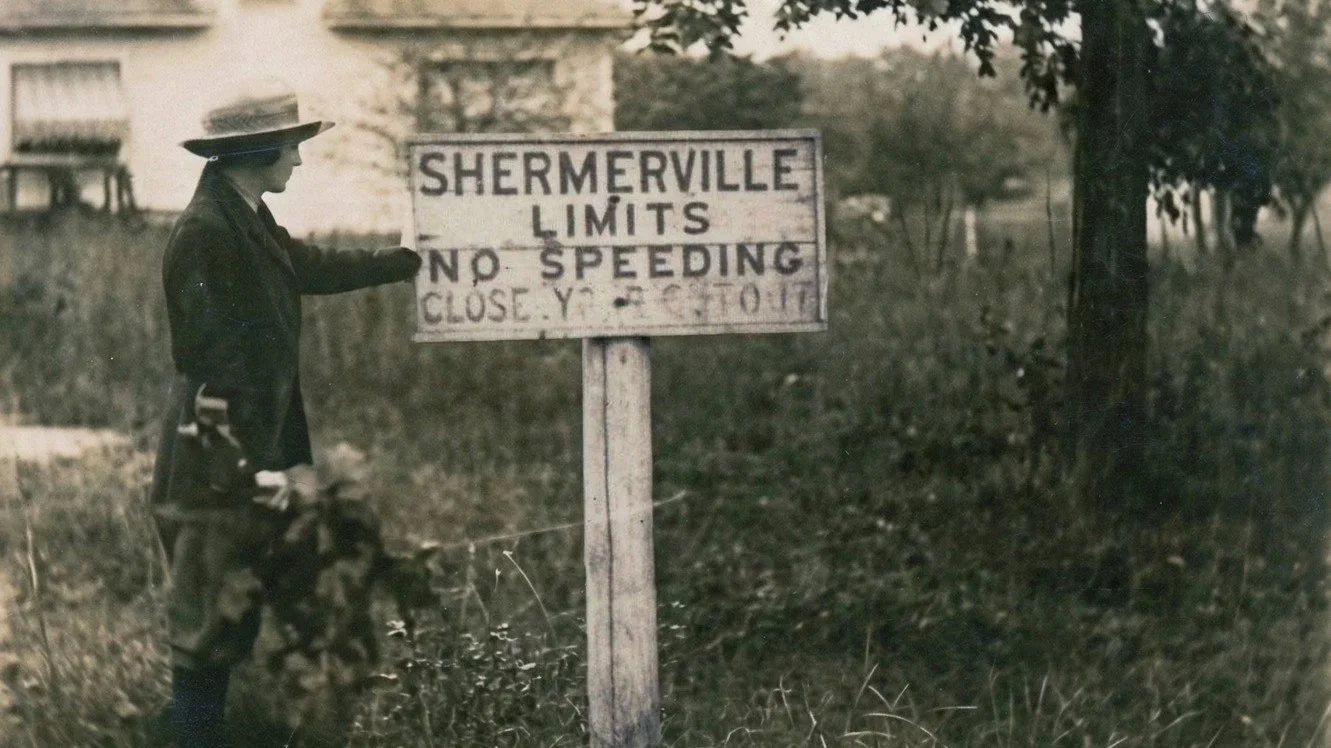
From the Chicago Tribune, March 11, 1945: Buried within an article about Northbrook’s new fire truck was a paragraph about Northbrook’s name change. Quoted in the article is Arthur Therrien, mayor of Shermerville during the time the Village’s name was changed:
FIRE FIGHTERS GET NEW TRUCK IN NORTHBROOK
“The village name was changed to Northbrook in 1922 because ‘a woman who like to shop in the loop couldn’t stand being teased about having packages sent to a place named “Shermerville,”’ Therrien said. “She enlisted the aid of a civic group and a petition to change the name was circulated. A contest was held to choose a name, and after 6 months the change was made legal. Northbrook was chosen because the north branch of the Chicago river runs thru the village. The present population of the village is 2,000.”

From The Announcements, August 17, 1950
NORTHBROOK DISCARDED THREE NAMES DURING DEVELOPMENT FROM FARM TO SUBURBAN VILLAGE
“To remove the lingering flavor of its proud but lusty past, the village in the early 20s decided to change its name. The picnic grounds were closed several years but the Shermerville name still conjured visions of noisy week-ends and gay crowds. The more staid Chicago and North Shore residents shunned the town as an undesirable place to live.
The town civic association in 1922 initiated a contest to find a new name which would be both dignified and pleasant. Three of the names submitted were put to a popular vote with the winning name Northbrook being submitted by George Schick who received a $100 prize. The new name stands for the town’s location on the north branch, or brook, of the Chicago River.”
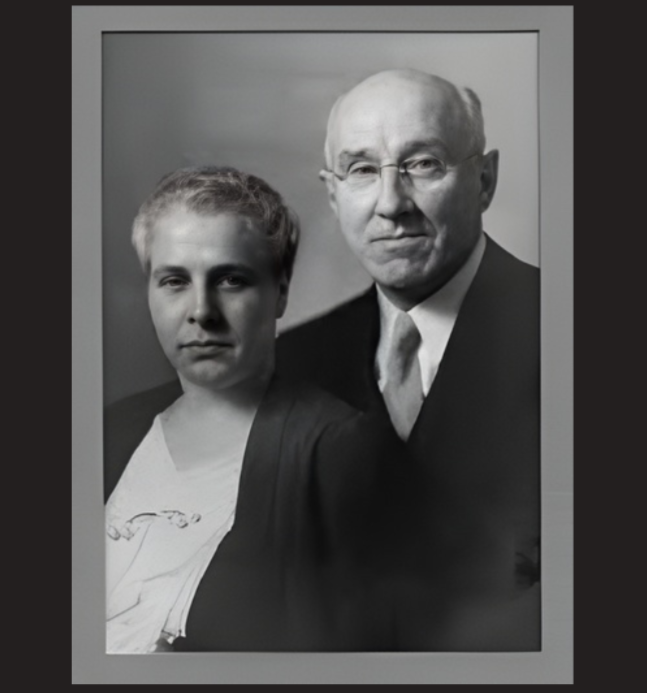
Undated letter from Edward Landwehr written to the Announcements in response to the above article. Setting the record straight, he responded in part:
“The Citizens Club of Shermerville, antedating the Civic Association of Northbrook started the movement to change the name of Shermerville by inviting public comment for or against. Sentiment expressed was generally in favor of a change. Then new names were asked to be submitted. Mr. Geo. Schick submitted the name Oakton. Northbrook was submitted by the undersigned writer of this item. Altogether 5 names were designated on the postal card in the form of a ballot and the cards mailed to our residents to vote for one they preferred for a new name. Northbrook received the decisive majority. This was before the expansion of our village area through annexation so that the North Shore Electric line was outside our village boundary. That road offered $100 to contestants submitting a satisfactory name for their depot. Mr. Geo. Schick as President of the Citizens Club entered the name Northbrook in the contest and received the award.
Following this action the name Shermer was kept in honor by being applied to the main thorofare in the village and continuing to Glenview. The name Northbrook was made up as a variant of Edgebrook, another station on the Milwaukee road, and the locale in northern Cook County besides the North branch of the Chicago River and there being only one similar name listed in the Post Office Directory—that in Pennsylvania.”

Shermerville to Northbrook
The commitment to change the image of the town went far beyond just changing the name. Northbrook residents were already being assessed for building hard roads and in 1923, they were taxed heavily to make major improvements in their new Village. The river through town was straightened and sewer lines were installed.
After the roads, river and sewer projects were completed, the law firm of Langworthy, Stevens, McKeag & Hurley was hired in 1927, to help develop comprehensive zoning ordinances. The “Official Plan for the Development of Northbrook” was also developed. The consulting engineering firm of Consoer, Older, & Quinlan, mapped out a visionary Village complete with wide boulevards and a town center east of the present downtown. Along both sides of the West Fork of the North Branch of the Chicago River was park land stretching from Dundee Road on the north to Willow Road.
To ensure that the downtown had a new look to go with the new name, many of the merchants replaced or refaced their old frame buildings. Sturdy and serviceable, with just enough attention paid to detail to give them character, the new Shermer Avenue buildings that replaced existing frame ones were: the Lorenz Garage in 1922, the Landwehr building in 1924, the Melzer building in 1926, and the Happ building, which was built in three sections, was completed in 1929. In addition, the Weiszmann building was built in 1929.
Civic buildings were also added to the community. Around the corner from the downtown at the corner of Walters Avenue and First Street a new Village Hall was built by Northbrook Civic in 1927 and a gymnasium with a stage and rooms underneath the stage was completed at the Northbrook School in 1929.
The attainment of the vision, however, was cut short by the Depression and it wasn’t until after World War II that the Village really began to grow. Although its shape and ambiance is different than envisioned in the 1920s, its reputation as a great place to live may even exceed the hopes of the people who worked to create a new town named Northbrook.